CFD Analysis of Bio-Inspired Alula Vortex Generators on a Forward-Swept Finite Wing
This project investigated how bio-inspired alula vortex generators influence the aerodynamic performance of a forward-swept finite wing representative of small UAVs and avian flight. Computational Fluid Dynamics (CFD) simulations were performed in OpenFOAM to study both dynamic pitching maneuvers and transient gust encounters at low Reynolds numbers. The objective was to compare numerical results to prior experimental work and to better understand flow separation, stall behavior, and gust-response characteristics relevant to UAV stability and control.
Q-criterion isosurfaces colored by velocity magnitude
*Gust animation shown at 11.1× slow motion. Total simulated duration: 0.72 s.
My role
Developed structured and unstructured CFD meshes in OpenFOAM.
Implemented transient simulations using the PIMPLE algorithm.
Modeled dynamic pitching motion of a NACA 0015 airfoil using dynamic mesh techniques.
Developed and analyzed one-cosine gust simulations for a 3D finite wing.
Evaluated transitional and DES turbulence models for low-Reynolds-number flow.
Performed post-processing and visualization in ParaView.
Executed simulations on Purdue University's Anvil supercomputing cluster.
3D Gust REponse
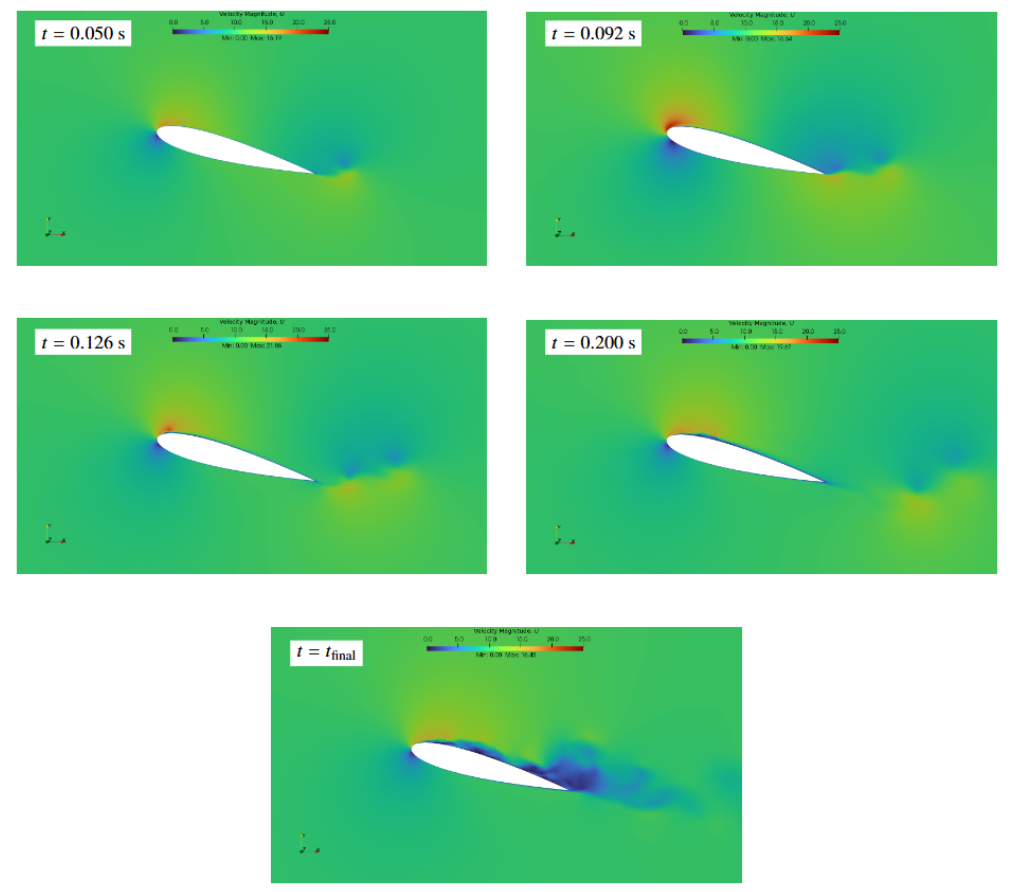
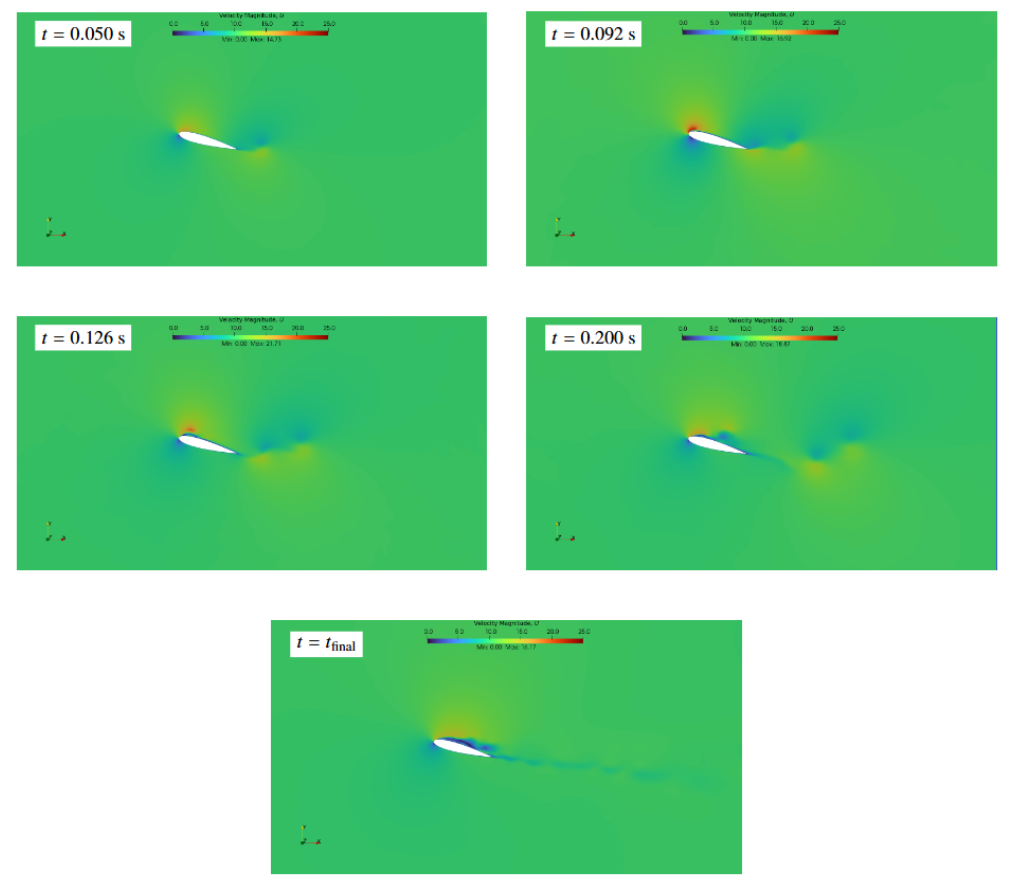
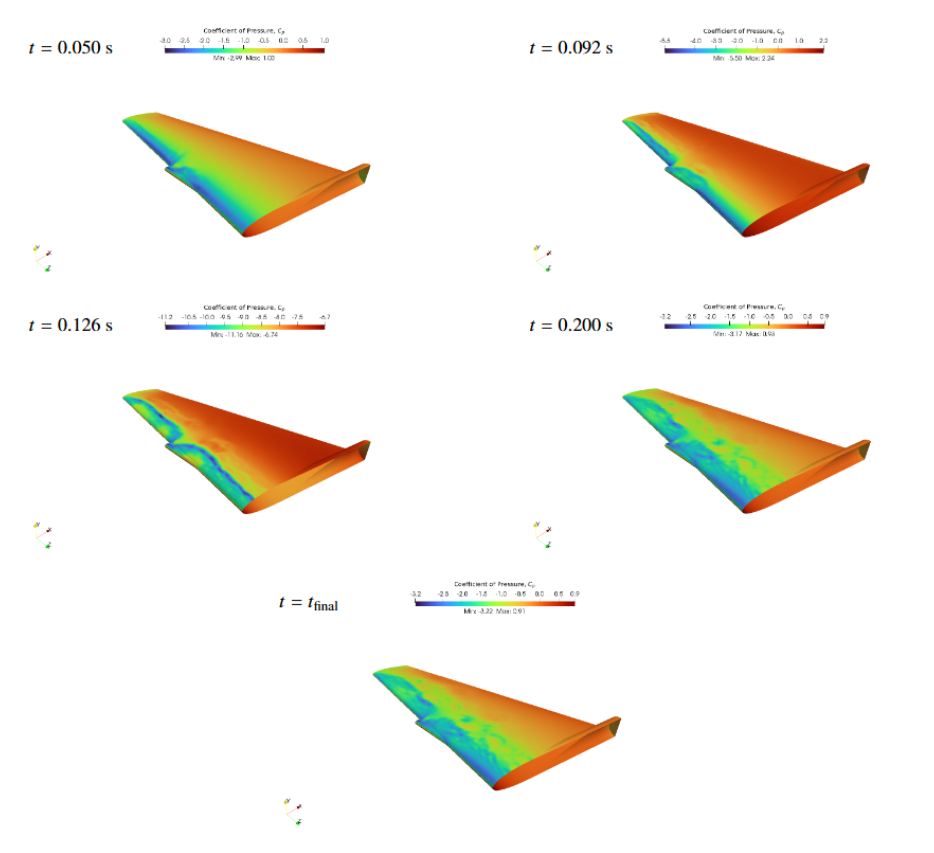
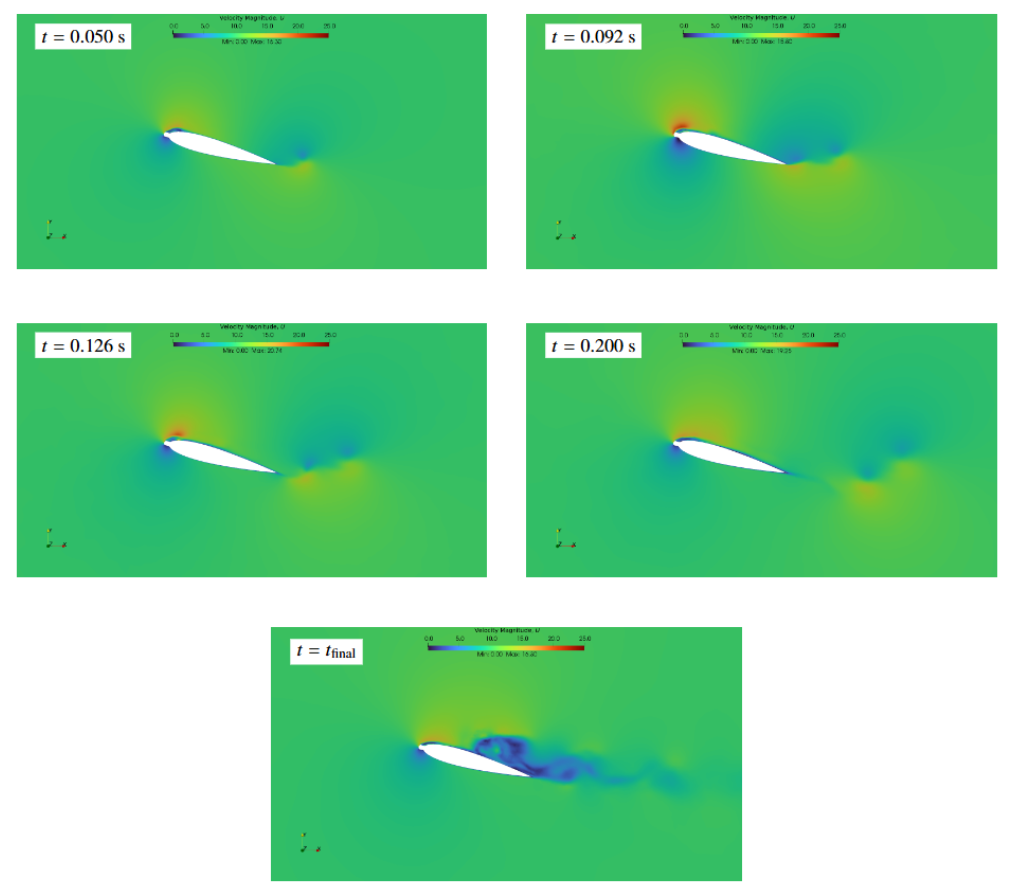
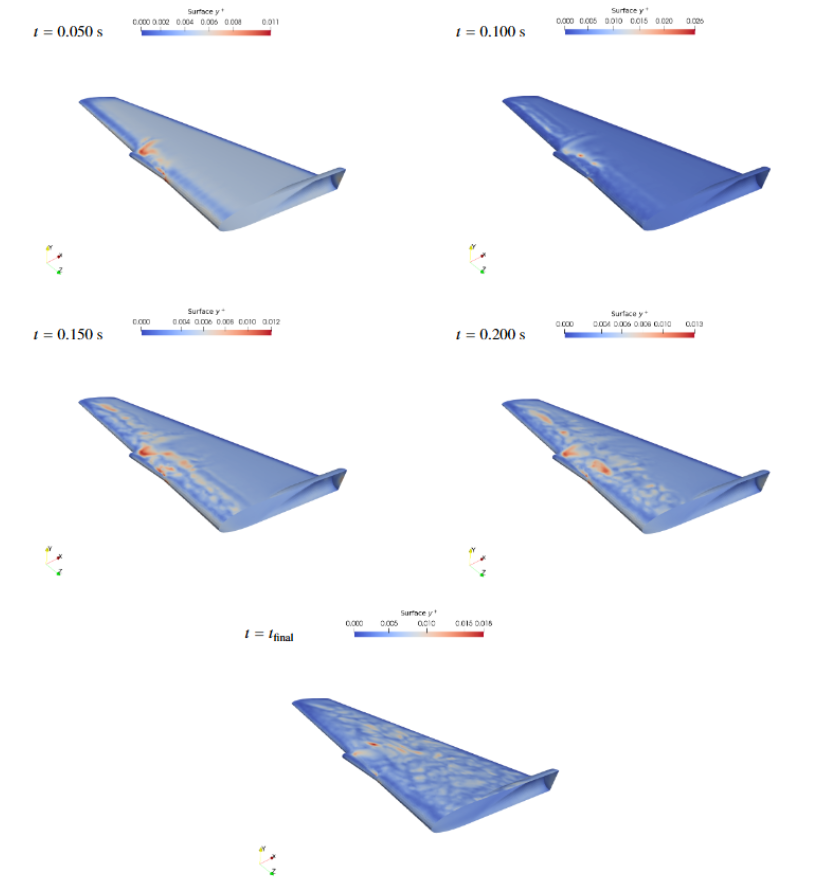
This following images show the aerodynamic and flow field response of the three-dimensional half-span bio-inspired wing .subjected to the prescribed one-cosine gusts at a fixed angle of attack of 15 degrees. This includes velocity magnitude, surface pressure coefficient and surface y-plus plots.
The results of the KWSSTDES simulation predict post-gust lift and drag values that are of the same order as dynamic pitching wind tunnel experimental data at an angle of attack of 15 degrees.
2D Dynamic Pitching
*10.7 seconds of real time, dynamic pitching simulations including velocity magnitude, pressure and vorticity plots.
softwarre & Tools
OpenFOAM
Gmsh
ParaView
Linux HPC Computing
Anvil Supercomputer
Turbulence Modeling (k-ω SST, KWSSTLM, DES)
Dynamic Meshing
Transient CFD