Angel One ISR UAV
Aerodynamics & Structures Lead
Industry sponsored aerospace capstone project completed at Rensselaer Polytechnic Institute in collaboration with Siemens.
Designed and analyzed a long-endurance ISR UAV to satisfy demanding mission, performance, and environmental requirements. My primary responsibilities focused on aerodynamic analysis, CFD modeling, stability evaluation, and finite element structural analysis of the aircraft main wing using FlightStream, STAR-CCM+, Siemens NX, and FEMAP.
My role
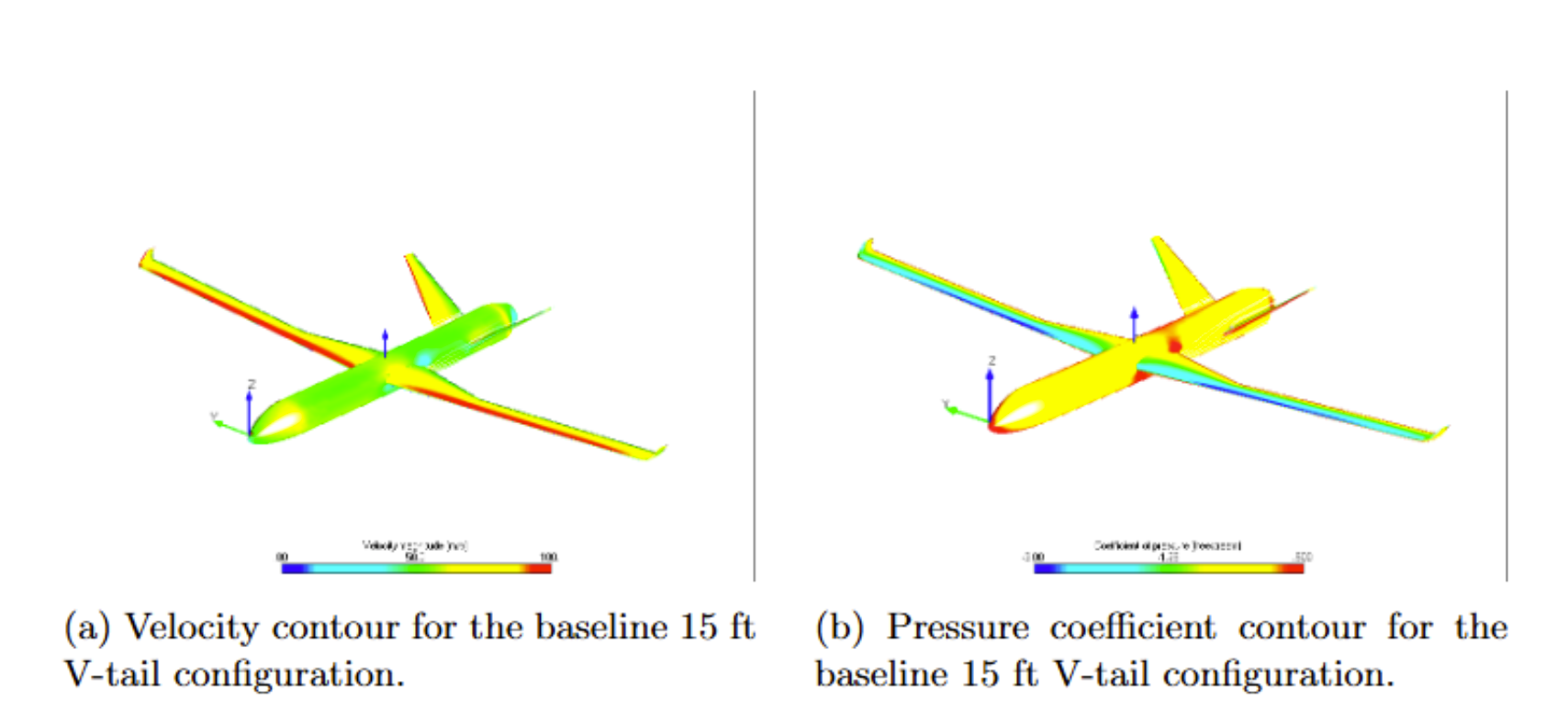
Performed aerodynamic and stability analysis for multiple UAV configurations using CFD and vortex-lattice methods.
Conducted finite element structural analysis of the main wing using Nastran solvers and shell-element modeling techniques.
Evaluated wing stresses, spar sizing, deflections, and aerodynamic loading response under realistic flight conditions.
Supported design trade studies involving wing geometry, tail configurations, stability behavior, and endurance optimization
DEsign process
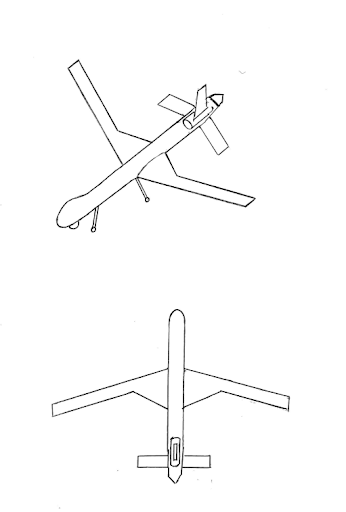
Conceptual Design Sketch
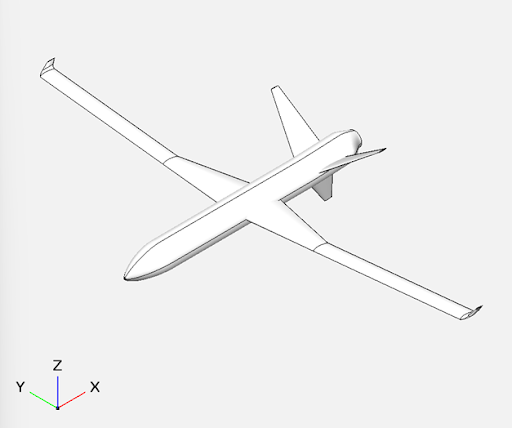
Interim Design Model
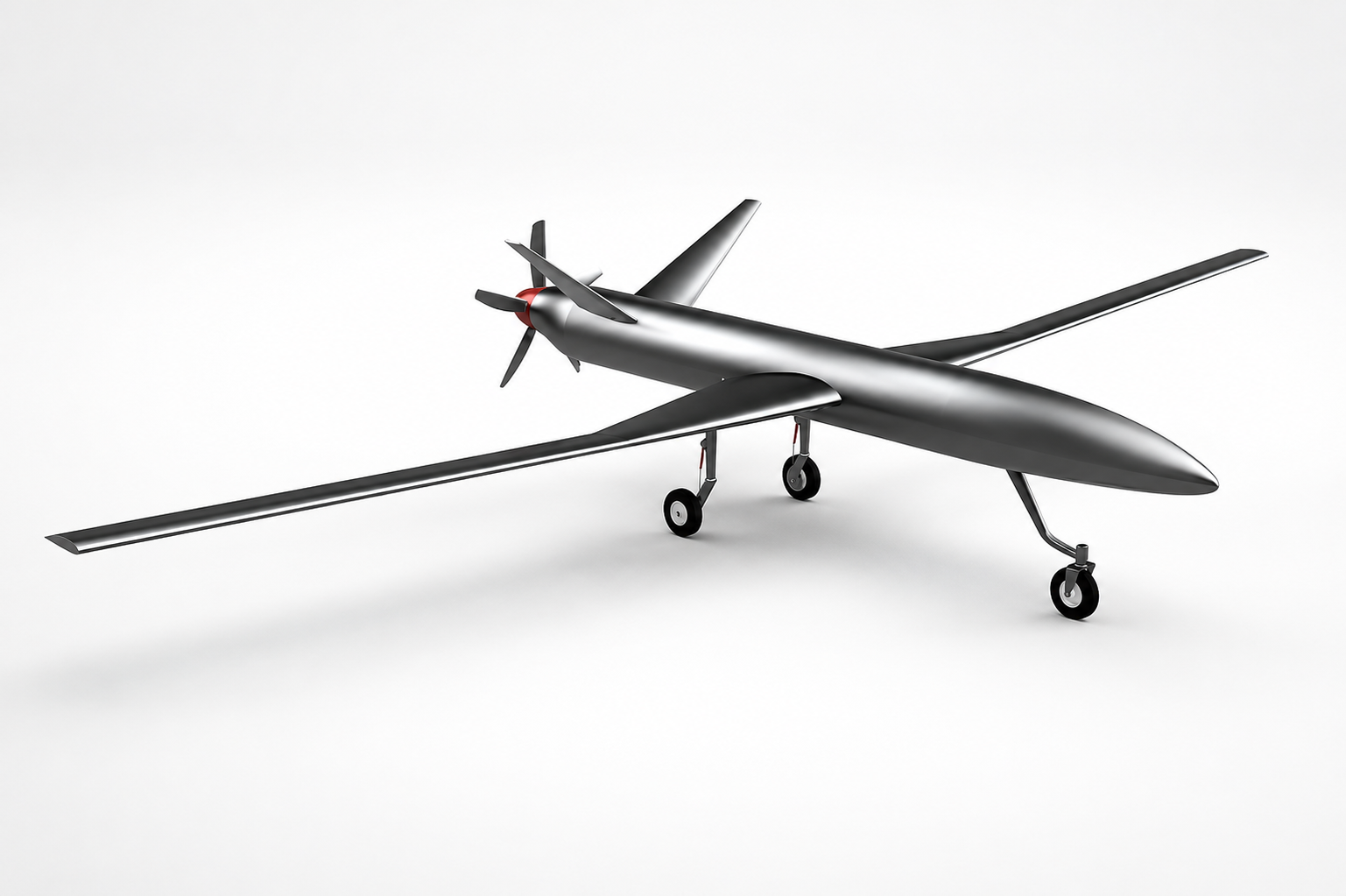
Final Design Model
The Angel One UAV was inspired by proven ISR platforms such as the MQ-9 Reaper, with a strong emphasis on endurance, aerodynamic efficiency, and mission flexibility. Throughout the project, multiple design iterations involving propulsion systems, aerodynamic configurations, and structural layouts were evaluated to optimize aircraft performance while satisfying stringent client requirements. Trade studies were conducted to quantitatively compare major design decisions, ultimately guiding the selection of the final aircraft architecture.
analysis
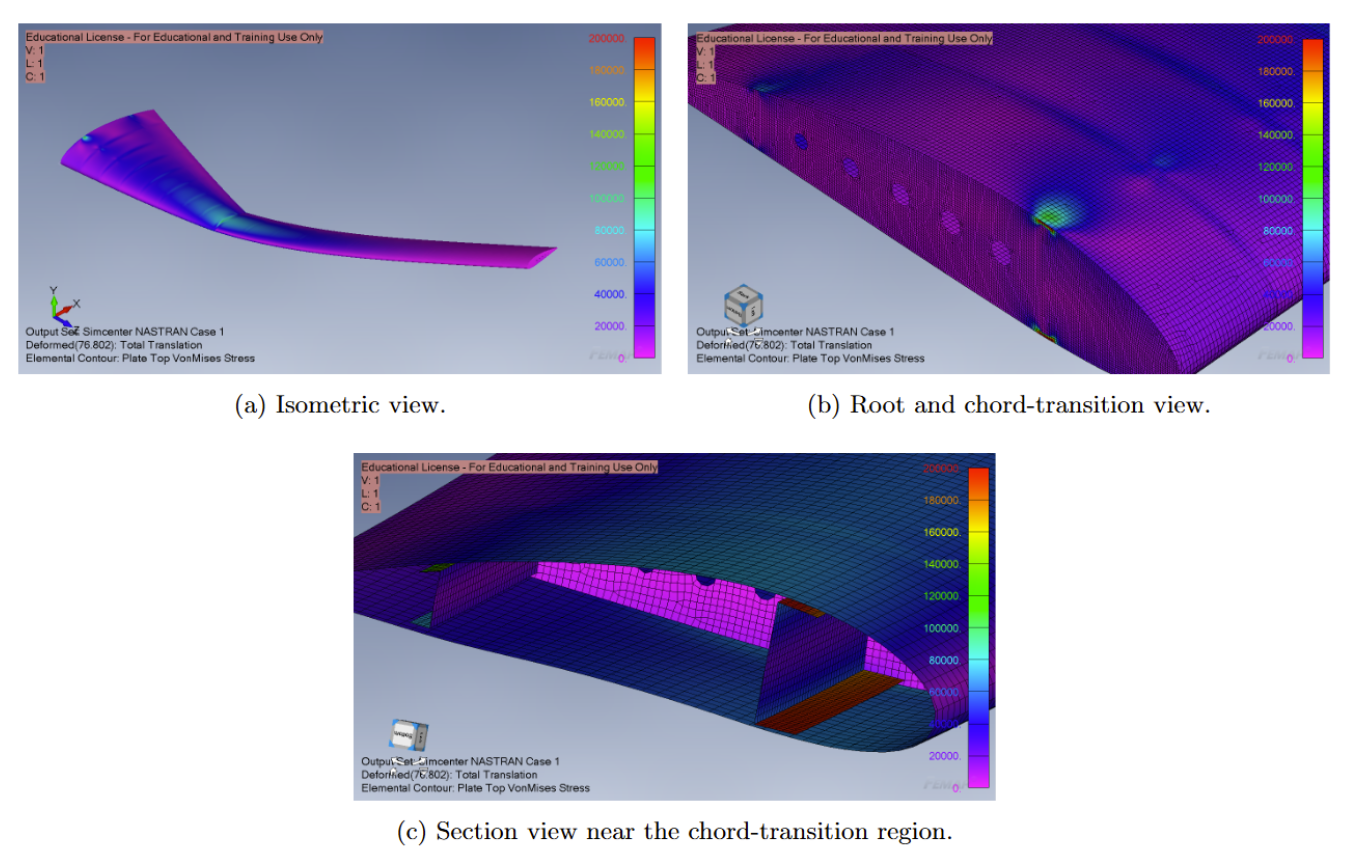
Structural analysis of the main wing was performed using the Nastran solver within FEMAP to evaluate structural response under realistic flight loading conditions. Multiple material configurations were investigated, including Aluminum 7075-T6 and carbon fiber reinforced spar caps, under normal operating loads as well as 3.8g limit and 5.7g ultimate loading scenarios. The analysis focused on wing stresses, deflections, spar sizing, and overall structural integrity under aerodynamic loading. Additional technical details and comprehensive analysis reports are available at the bottom of this page.
Aluminum 7075-T6:
Normal flight conditions:
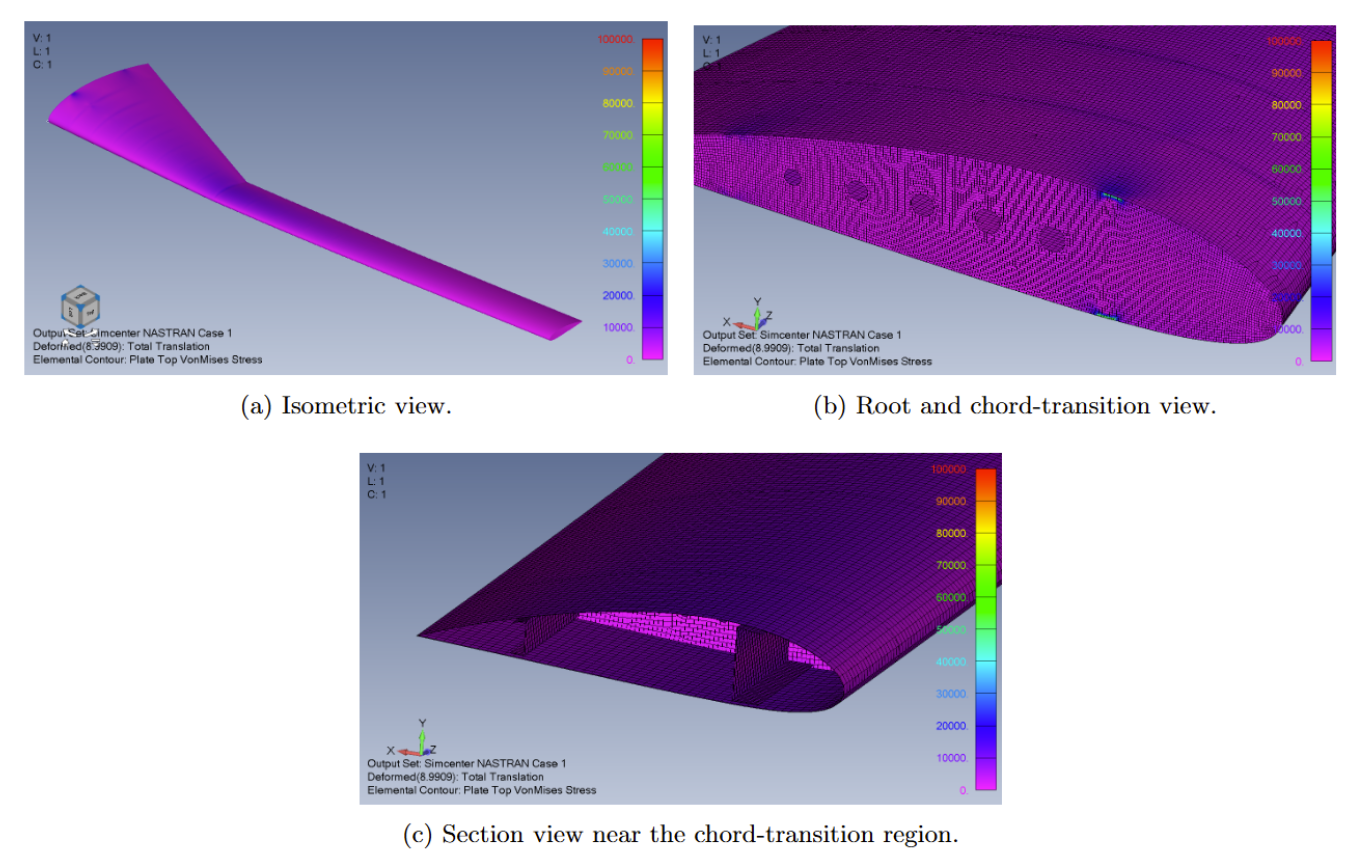
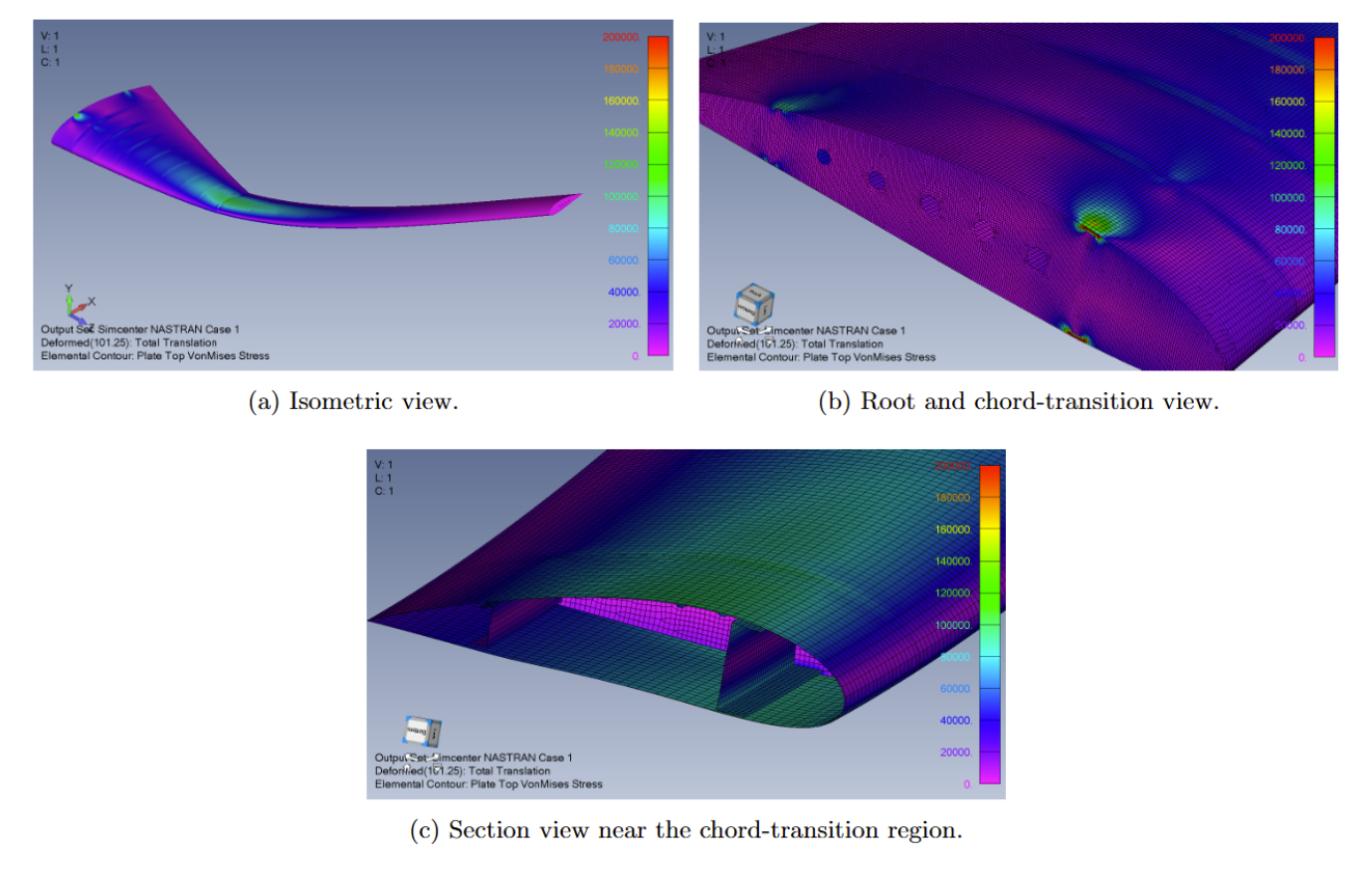
5.7g Ultimate Load:
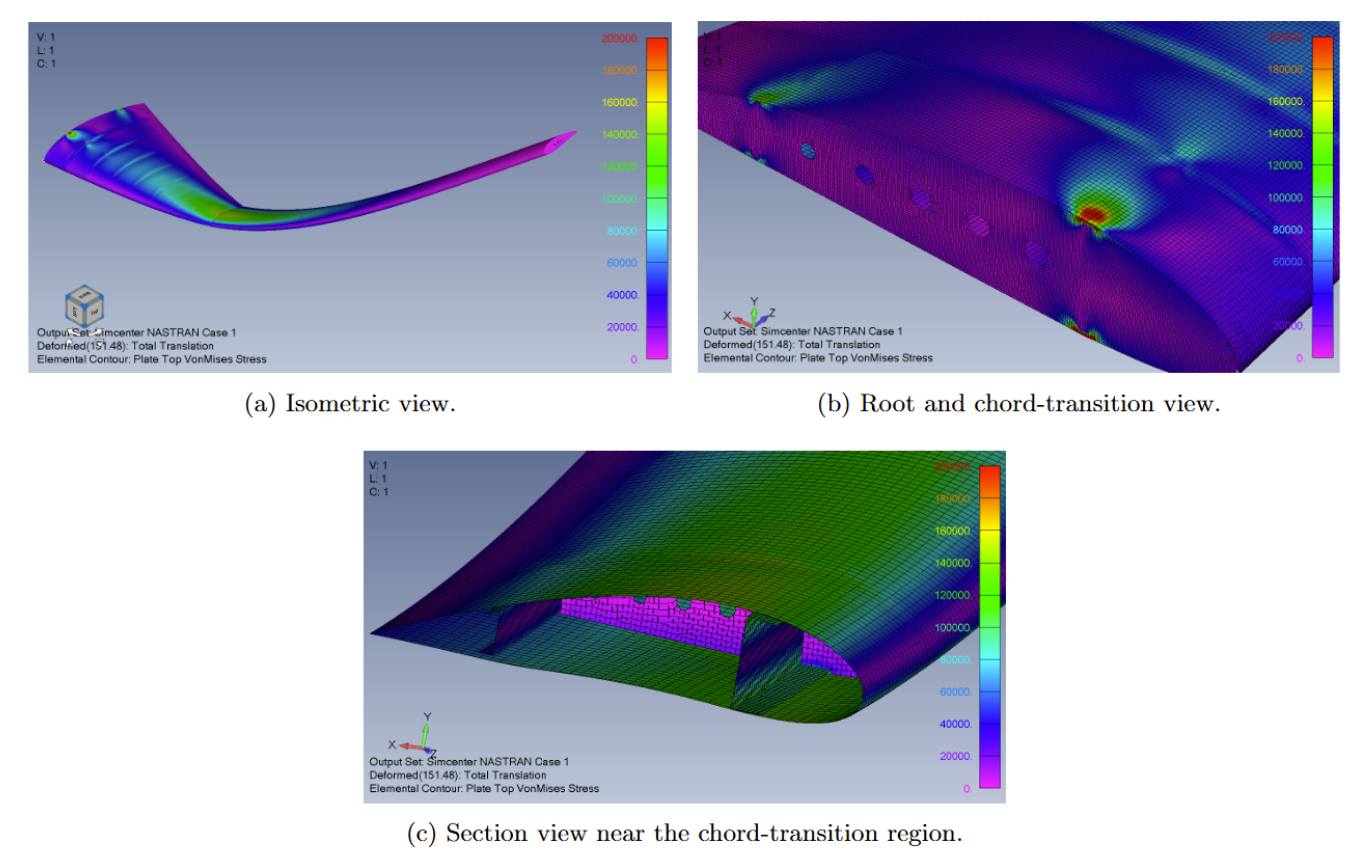
Carbon Fiber:
Normal flight conditions:
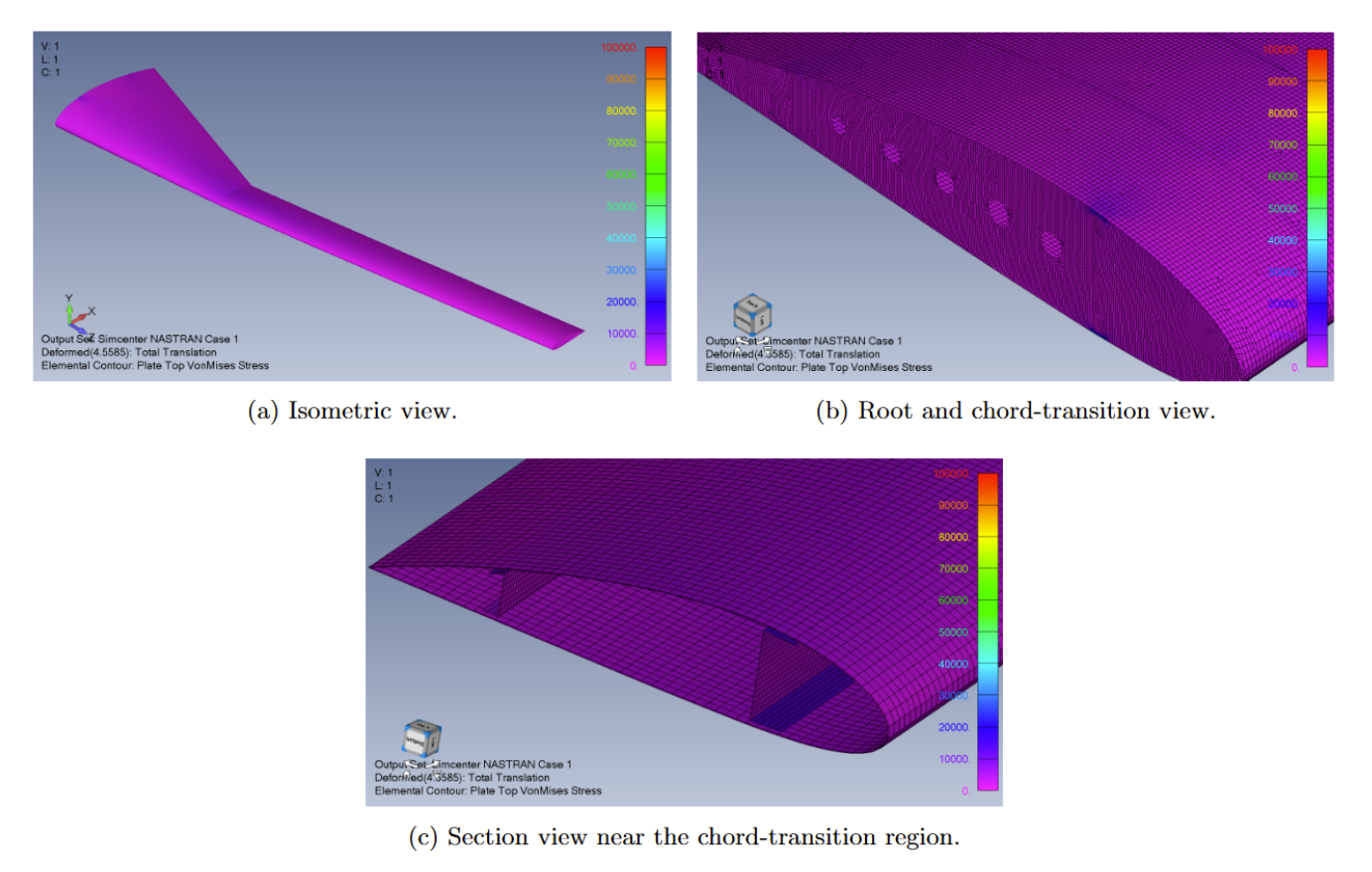
3.8g Limit Load:
3.8g Limit Load:
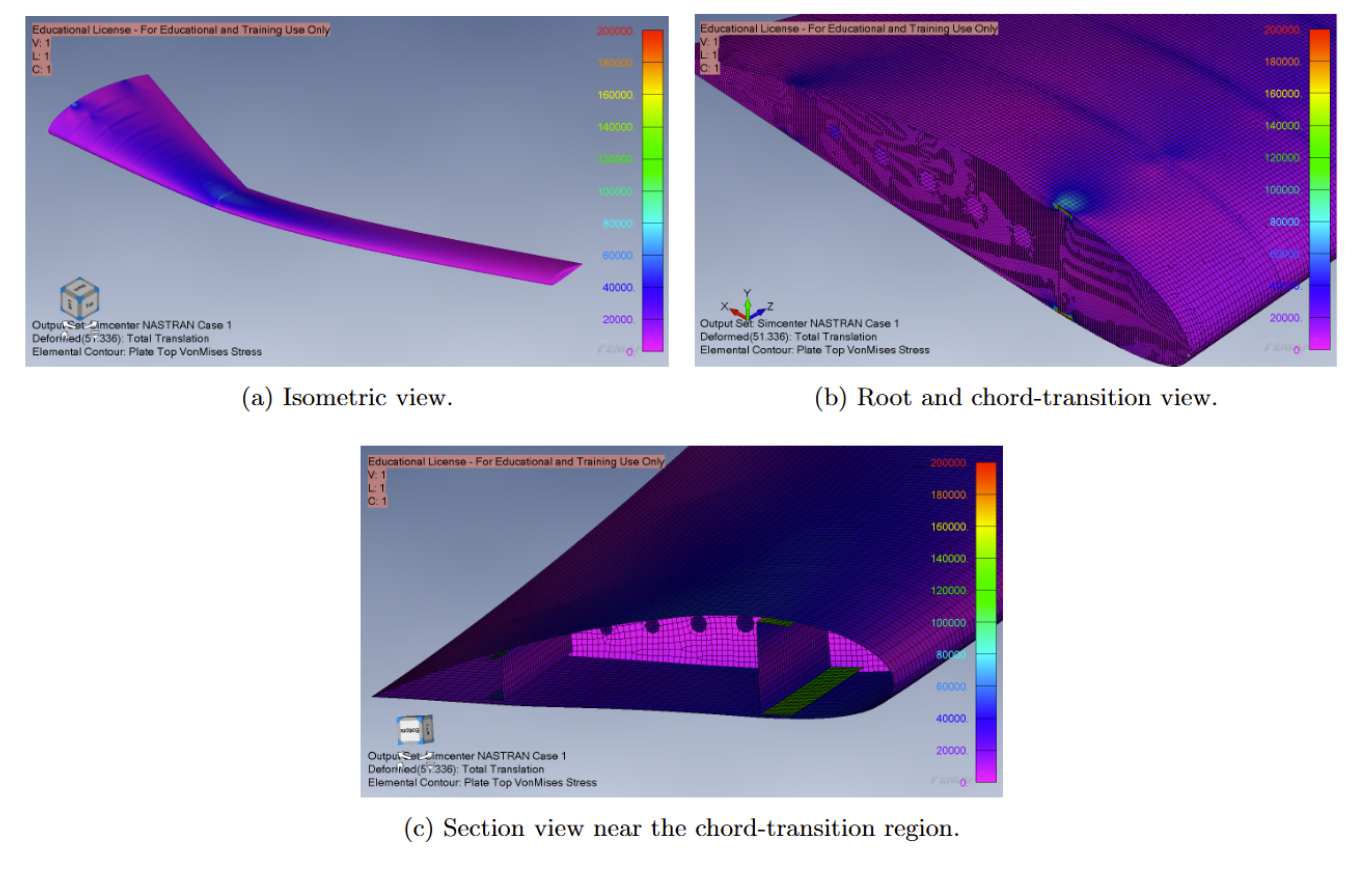
5.7g Ultimate Load:
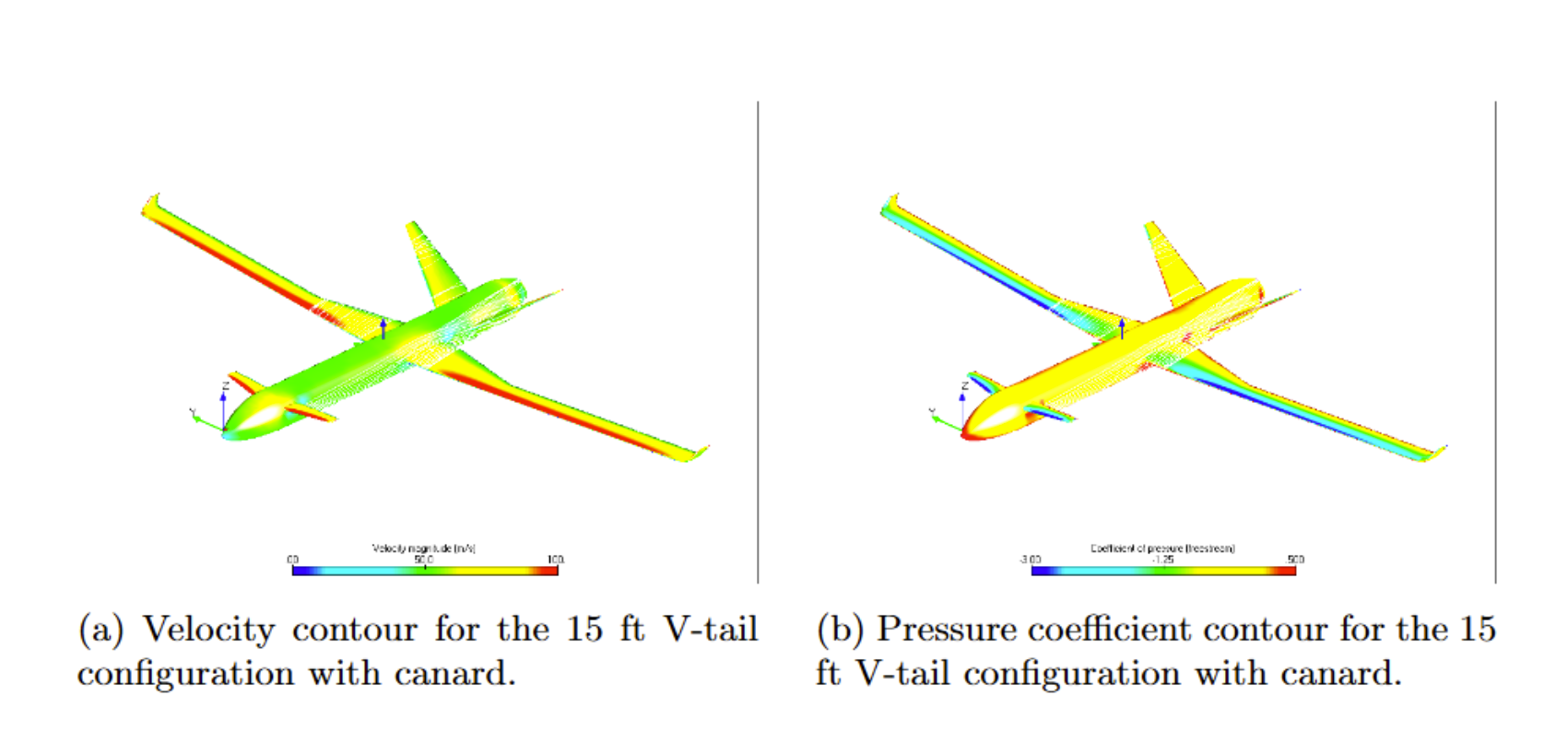
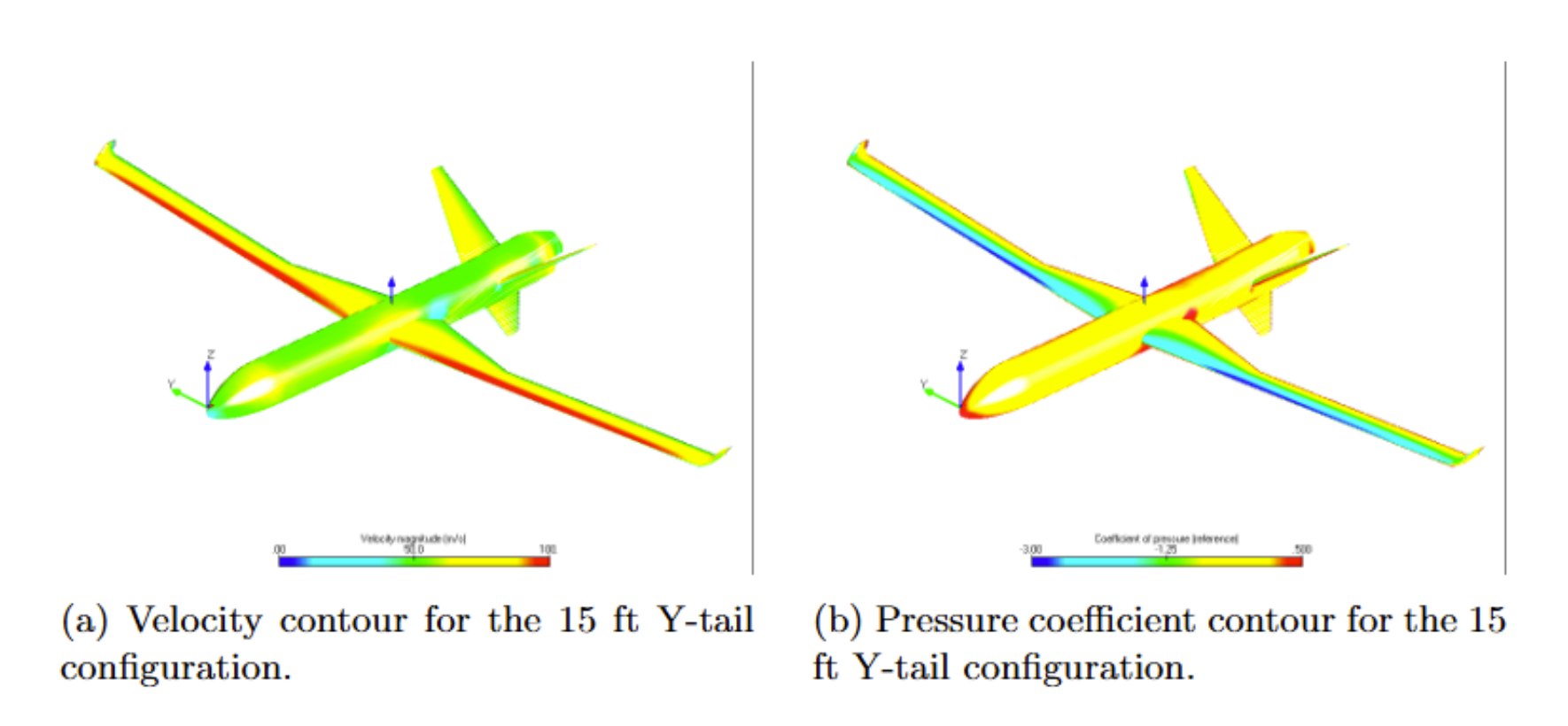
Aerodynamic development of the aircraft began with preliminary analysis in XFLR5 and FlightStream, where airfoil selection and baseline geometric properties were established. The design process then progressed into higher-fidelity aerodynamic and stability analysis to further refine aircraft performance, control characteristics, and overall aerodynamic efficiency.
final design drawings
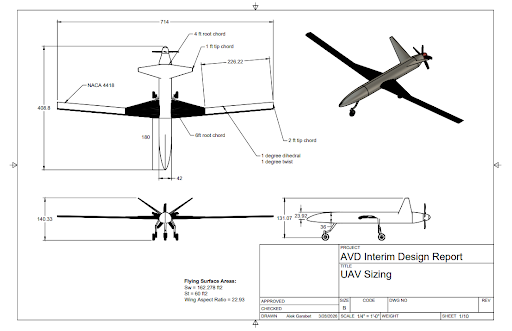
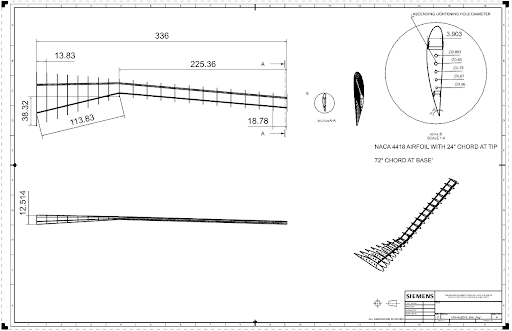
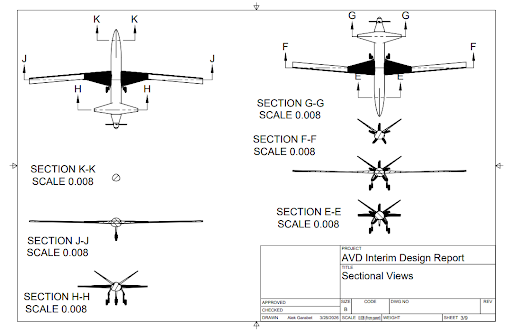
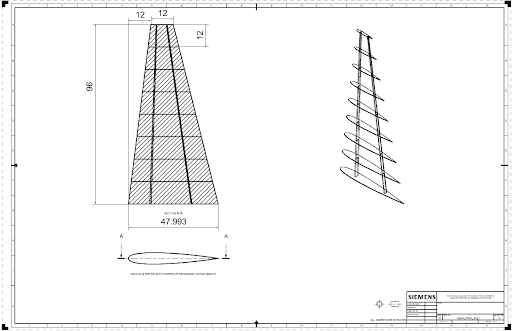
Please see a more comprehensive report on the nonlinear finite element analysis of the main wing of the UAV below